Building phone + TV games
Making social games easier to discover, start, and play together without a console.
- When
- 2024–2025
- Where
- Independent
- What I did
- Product design, React Native development, Prototyping, User testing, 0–1 product strategy, Branding
Outcomes
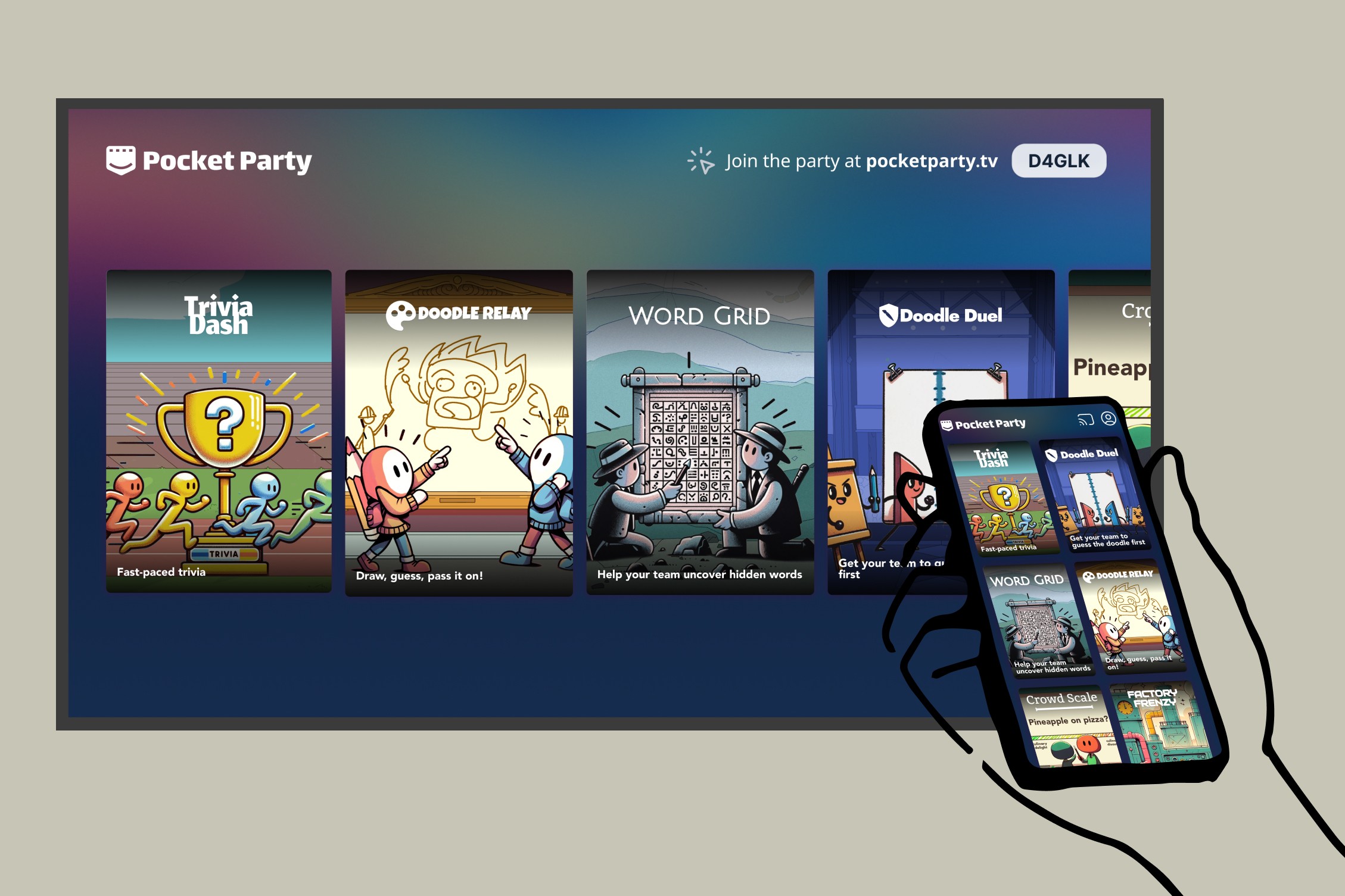
- Built complete phone-and-TV multiplayer game on React Native.
- Joined the Antler Residency and received Canada Media Fund support for the initial concept.
- Learned React Native and multiplayer game development by shipping the product end to end.
In brief
I started a journey to learn more about game development and explore concepts that would make social games easier to enjoy in person. I studied the games industry, learned React Native, built Trivia Dash for smart TVs and the web, explored starting a company, joined the Antler Residency, and received Canada Media Fund support for an initial concept.
This was a shift back toward hands-on product design and building. I was motivated by a simple idea: social gaming should feel spontaneous and accessible, not like an event that needs specialist hardware and advance planning.
The problem
Phone-and-TV games can create inclusive, memorable moments, but they happen surprisingly infrequently. Discovery and setup are complex. Most living-room games still require a console or PC, then send casual players into game stores and interaction patterns they may not know.
The goal became clear: bring social games to the TV that non-gamers will want to play.
User interviews showed that people enjoyed many different games, but did not have a persistent habit around one product. That pushed me to think less about another destination app and more about removing the friction between “we should play something” and actually starting.
Testing the premise
My first concept was a mobile app that screencast games to a TV. I moved away from it after uncovering technical and support limitations across the wide range of consumer hardware. A smart-TV-first experience created a more reliable foundation while still letting every player use the phone already in their hand.
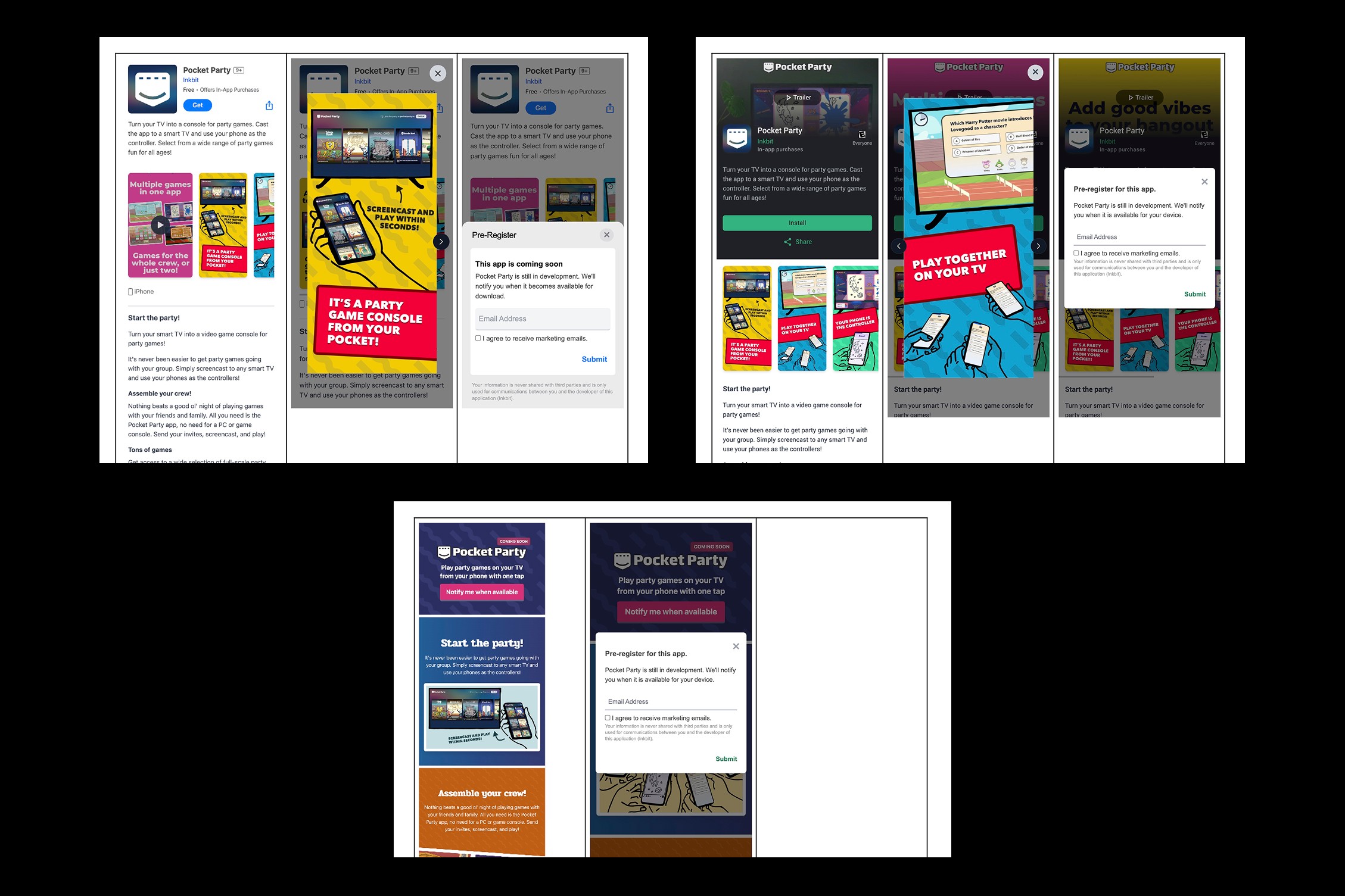
Before investing deeply, I built a landing page and device-specific mock app stores, then sent Snapchat and TikTok traffic through them. The click-through and conversion signals were promising, while existing competitors offered useful market validation.
From a platform to one good game
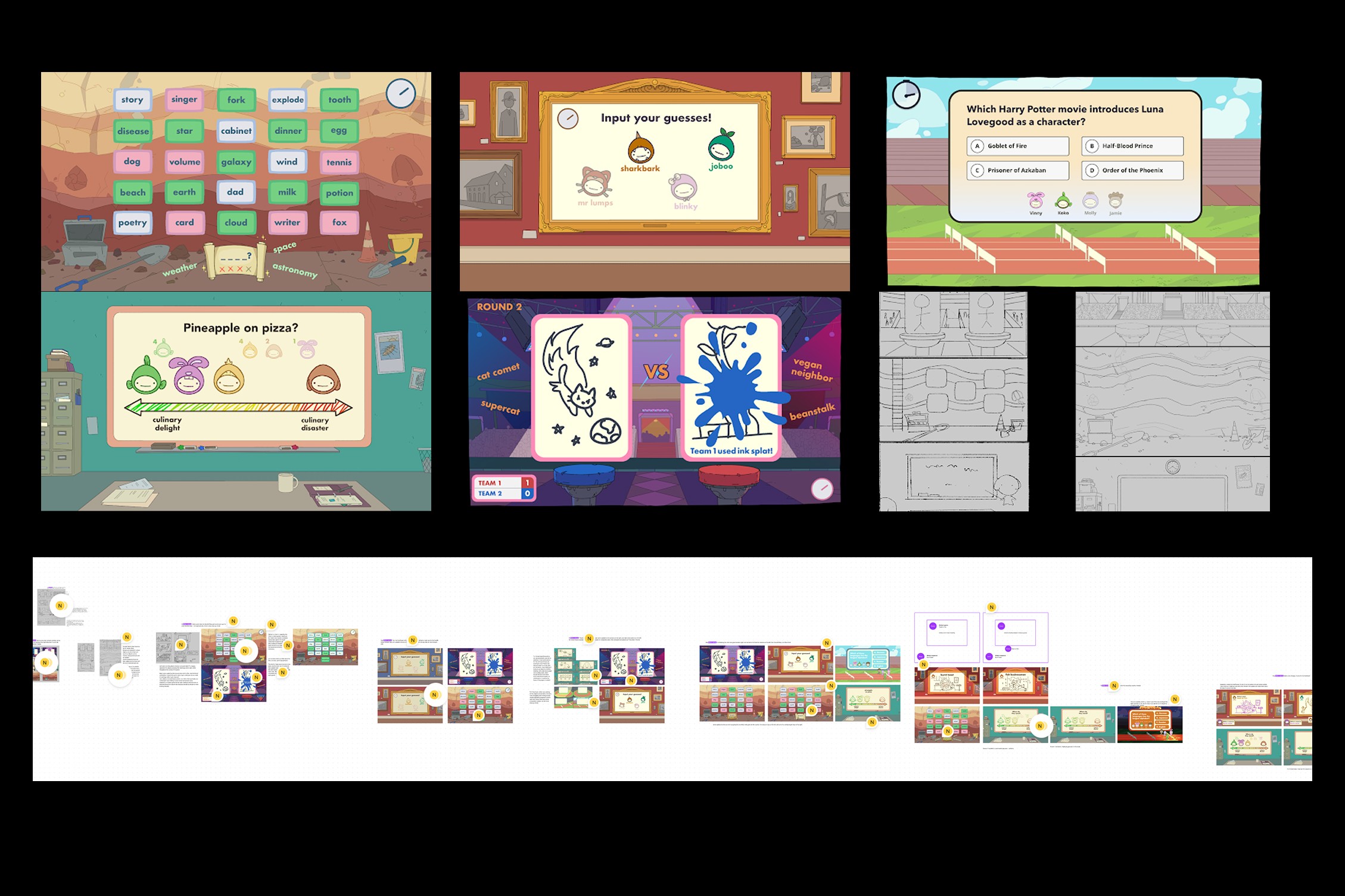
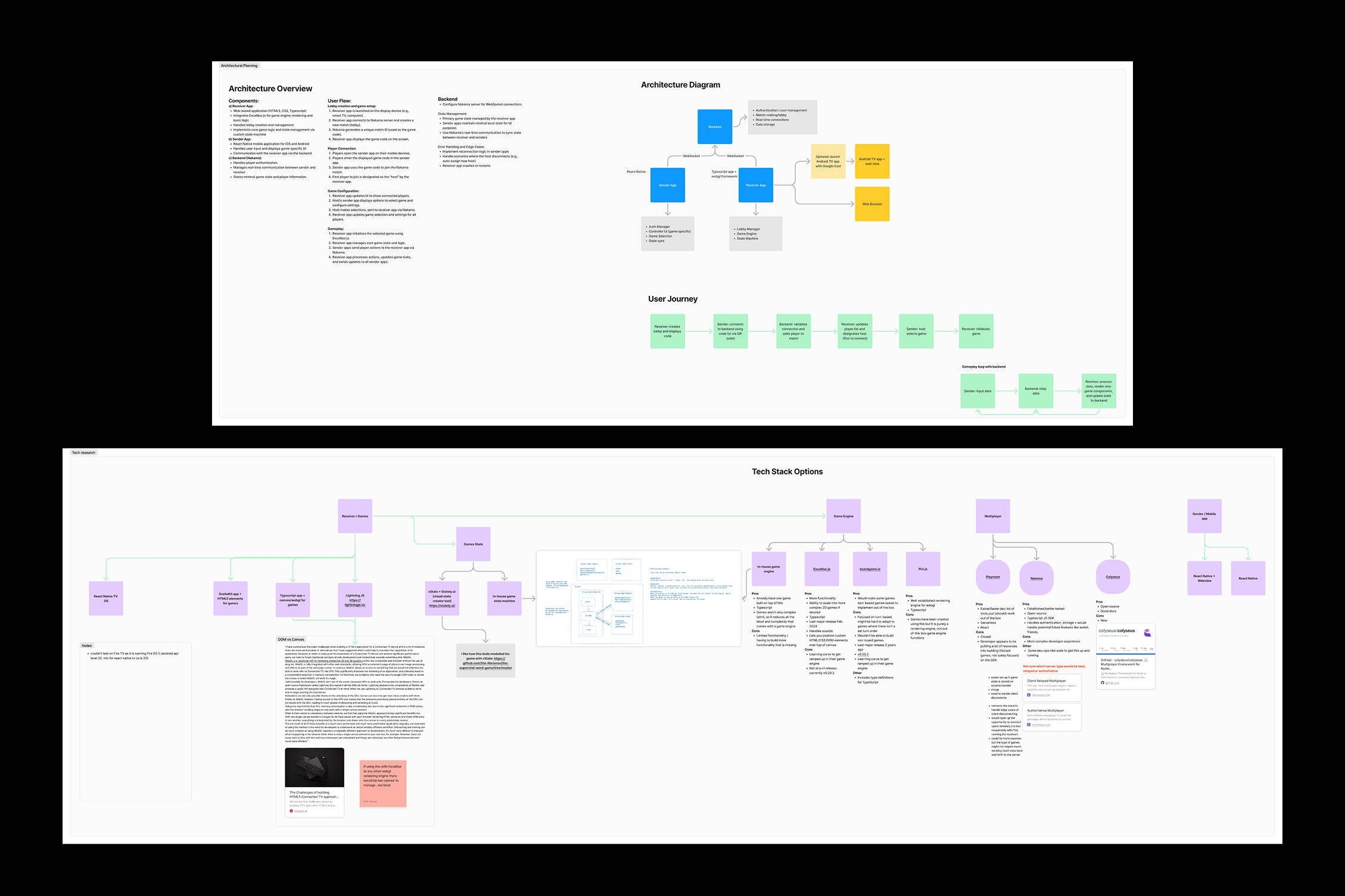
The concept began as a multi-game app. Research and early prototyping made the scope problem obvious, so I narrowed it to one multiplayer title and worked with an experienced developer to establish an architecture that could scale later.
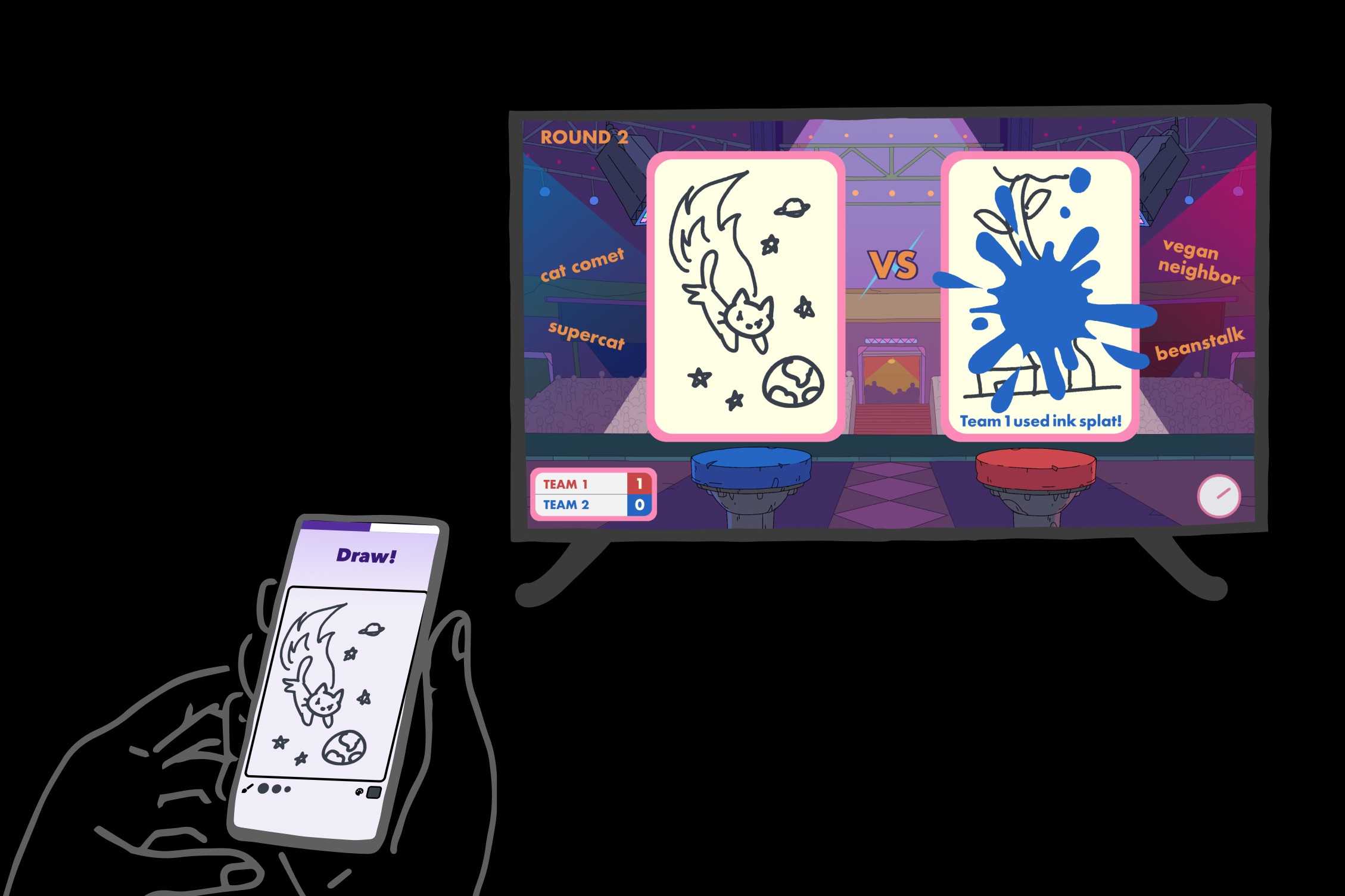
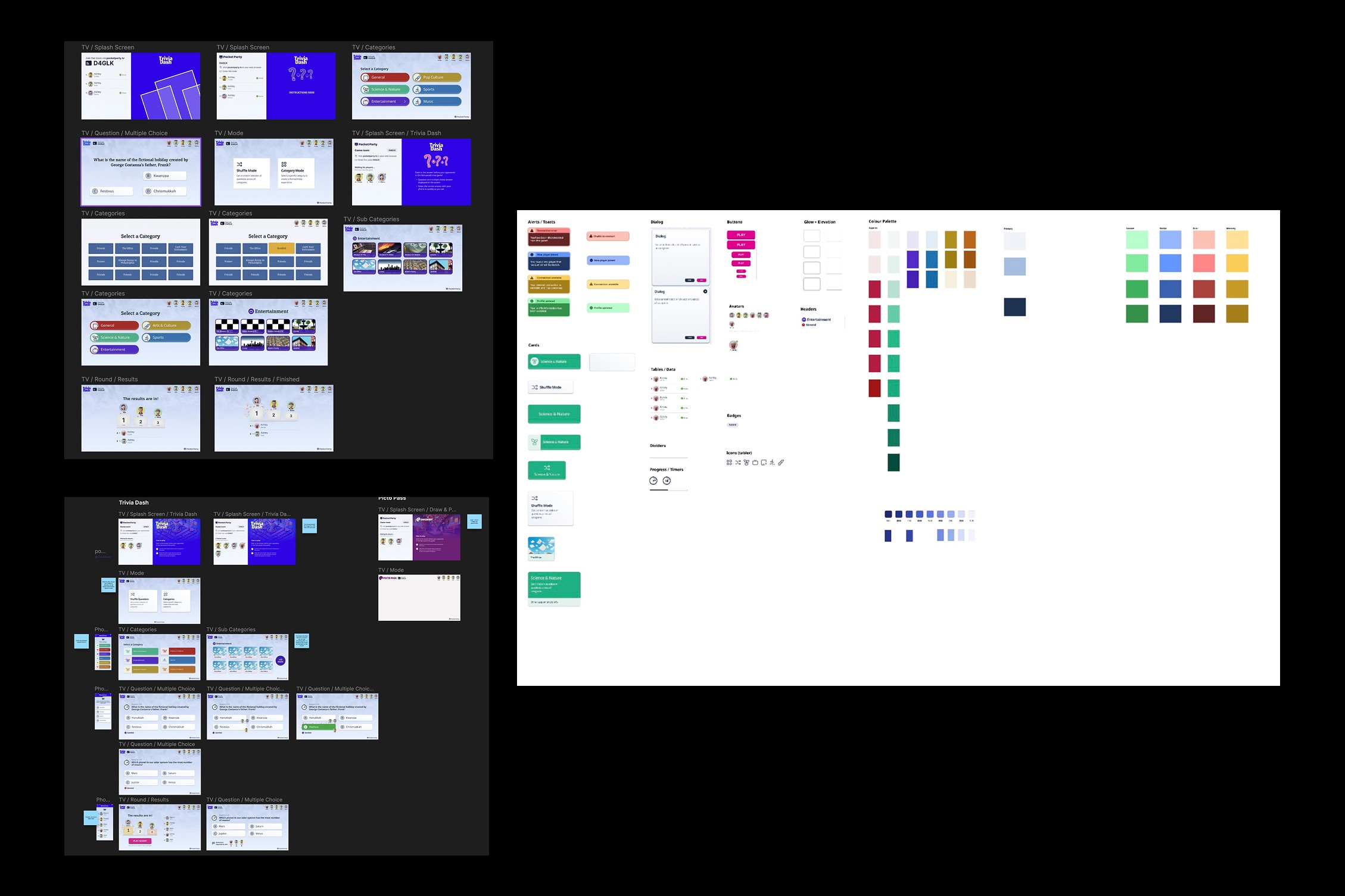
I designed trivia mockups and reusable components, including two phone-controller patterns: multiple choice and a fast buzzer. Playtesting showed that rounds and sound made the room more exciting, while the phone interface needed very low information density. Players should look at the people and the shared TV—not down at a personal screen.
Building the whole thing
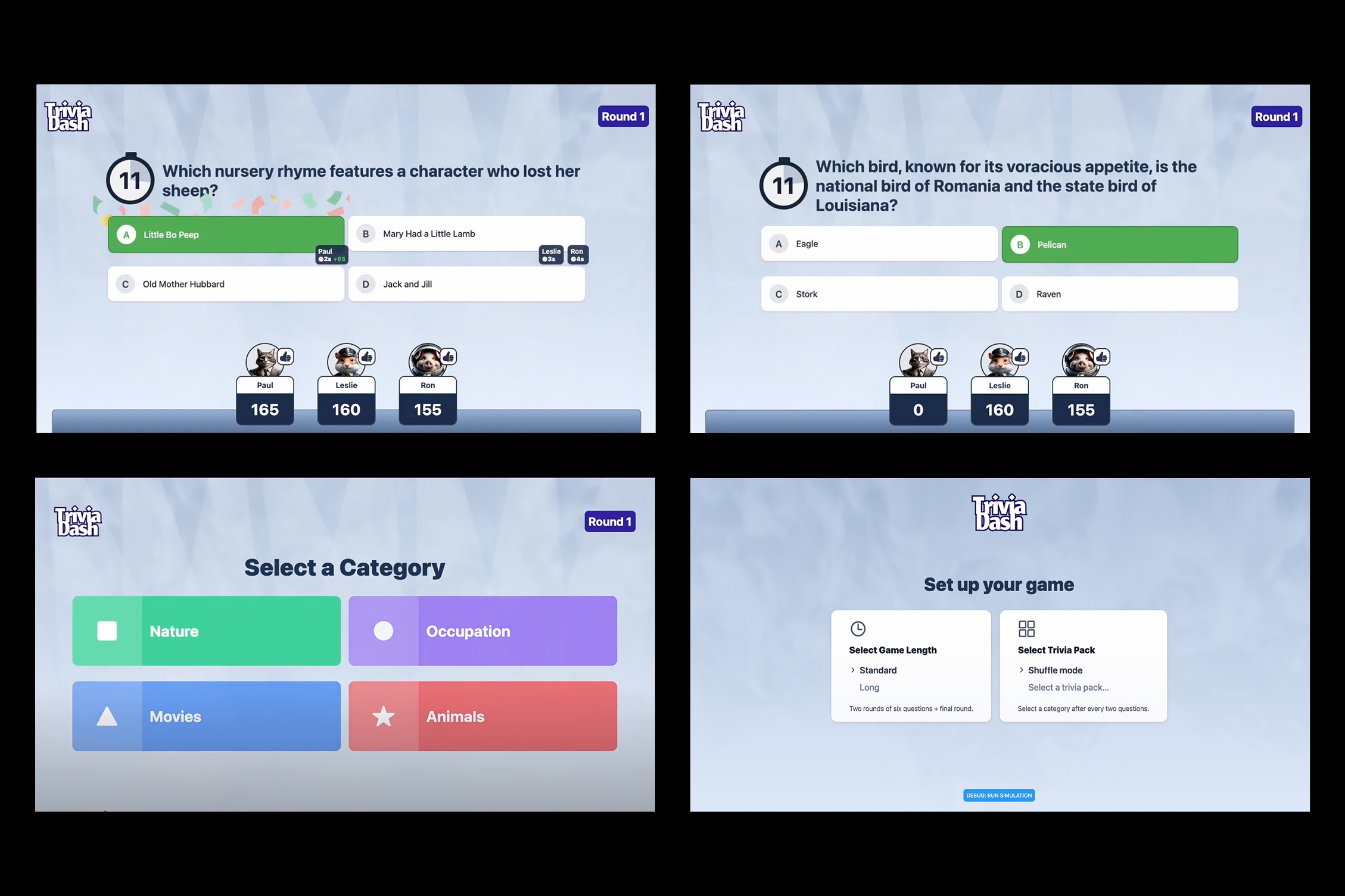
I joined Antler to evaluate both the product and whether venture capital was the right path. I ultimately chose to keep building independently. Using React Native and a multiplayer framework, I took Trivia Dash from prototype to a finished game while developing much stronger React and game-industry skills.
The result is a complete social trivia experience that uses the TV as the shared stage and each phone as a nearly invisible controller.
What I learned
Building rather than only designing compressed every feedback loop. Technical constraints shaped product decisions immediately; playtests exposed social dynamics that a screen flow never could; and reducing scope was what made a coherent product possible. The project gave me a practical way to combine product strategy, interaction design, brand, and engineering in one system.