Redesigning Hive for the events industry
A simpler way for event marketers to sell more tickets with smarter email and SMS campaigns.
- When
- 2023–2024
- Where
- Hive
- What I did
- Product design, Product strategy, User research, Prototyping
Outcomes
- Campaign templates reached a 60% conversion rate.
- Campaigns created through Event Hub were completed 15% faster.
- 10% of all campaigns were sent through Event Hub within its first four months.
Context
When I joined Hive, it was a flexible platform used across industries, but it lacked direction. We saw an opportunity to focus on event marketing and repositioned Hive with purpose-built tools and workflows designed to help organizers sell out events.
Despite having the underlying tools in place, many customers were not running campaigns that consistently drove ticket sales. The product lacked the structure and guidance needed to support effective, event-centric marketing.
Problem areas
- Customers used Hive's tools in fragmented ways, without a clear workflow tailored to event promotion.
- Campaign planning and execution were scattered across the product, making performance hard to measure and work hard to organize.
- Important event campaign types, including presales and SMS, were difficult to set up or discover.
- New users had no obvious starting point or guidance toward the practices that help sell tickets.
We needed to center the experience on the whole lifecycle of an event—from early signups through last-minute reminders. The product needed to lower the effort for small teams while making email and SMS campaigns quick to create, track, and duplicate.
Design process
Discovery and definition
We worked closely with event marketers to understand their goals, workflows, and pain points. I also helped establish a more formal product-development process, introduced structured customer testing, and implemented product analytics with PostHog.
Exploration and ideation
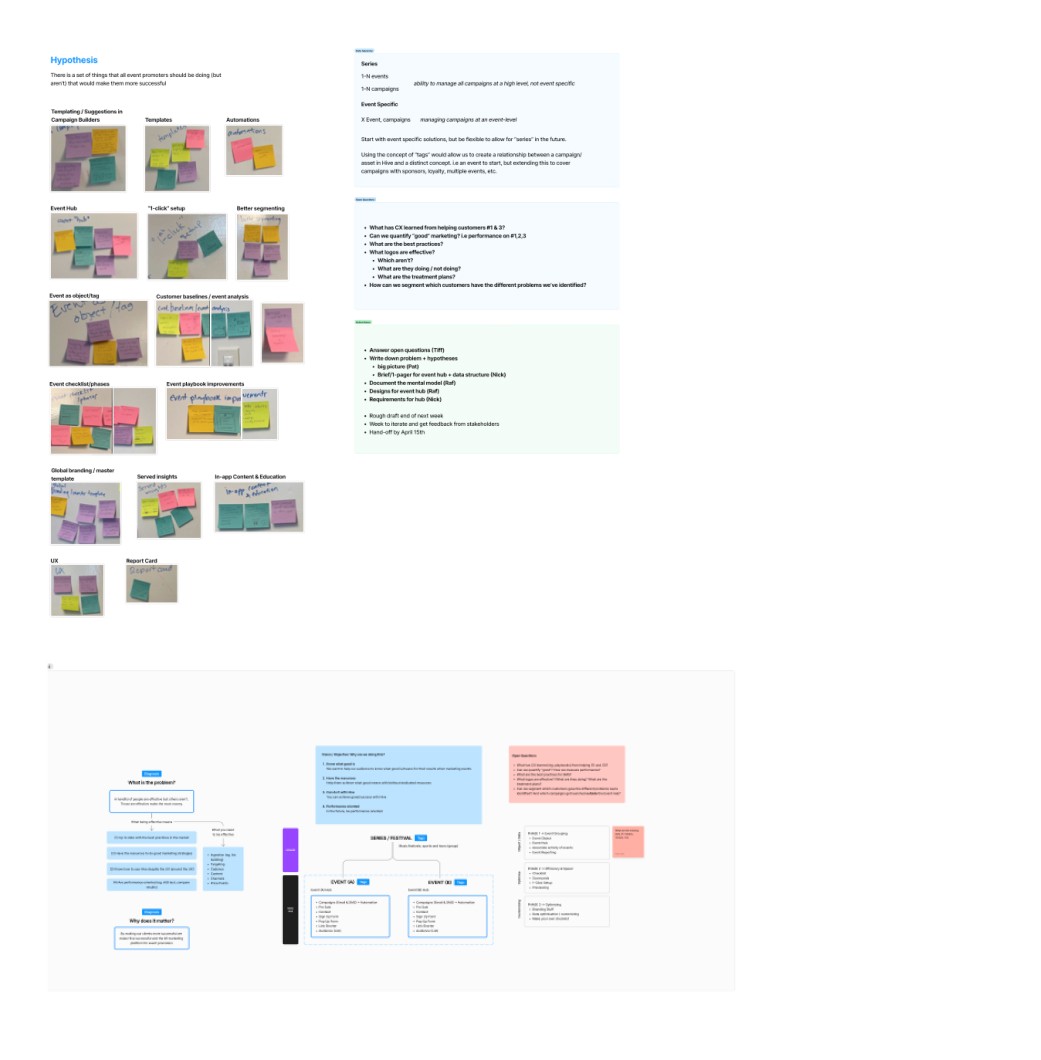
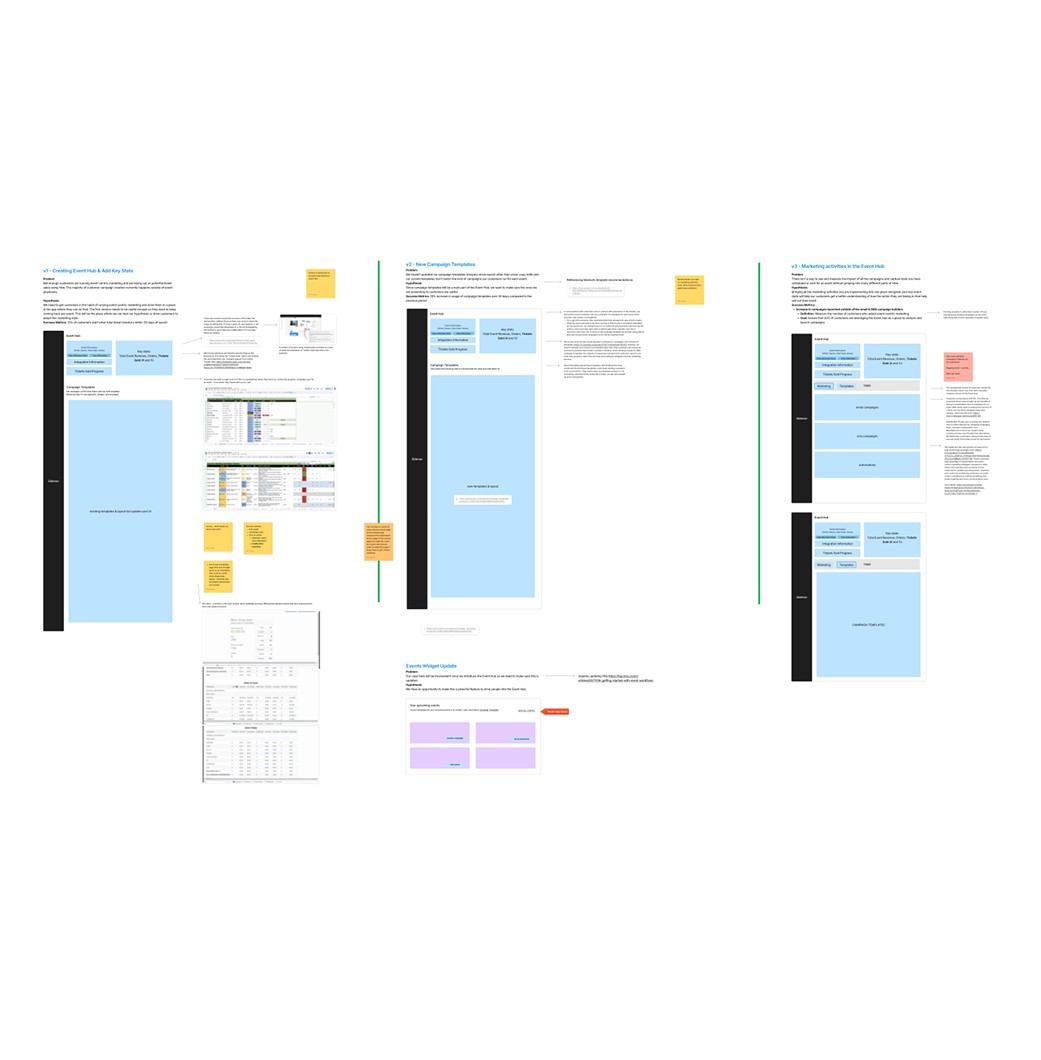
We analyzed usage data and ran whiteboard sessions to sketch a more event-focused experience. Customer feedback repeatedly pointed toward the need for one place to coordinate and measure campaigns.
Design and prototyping
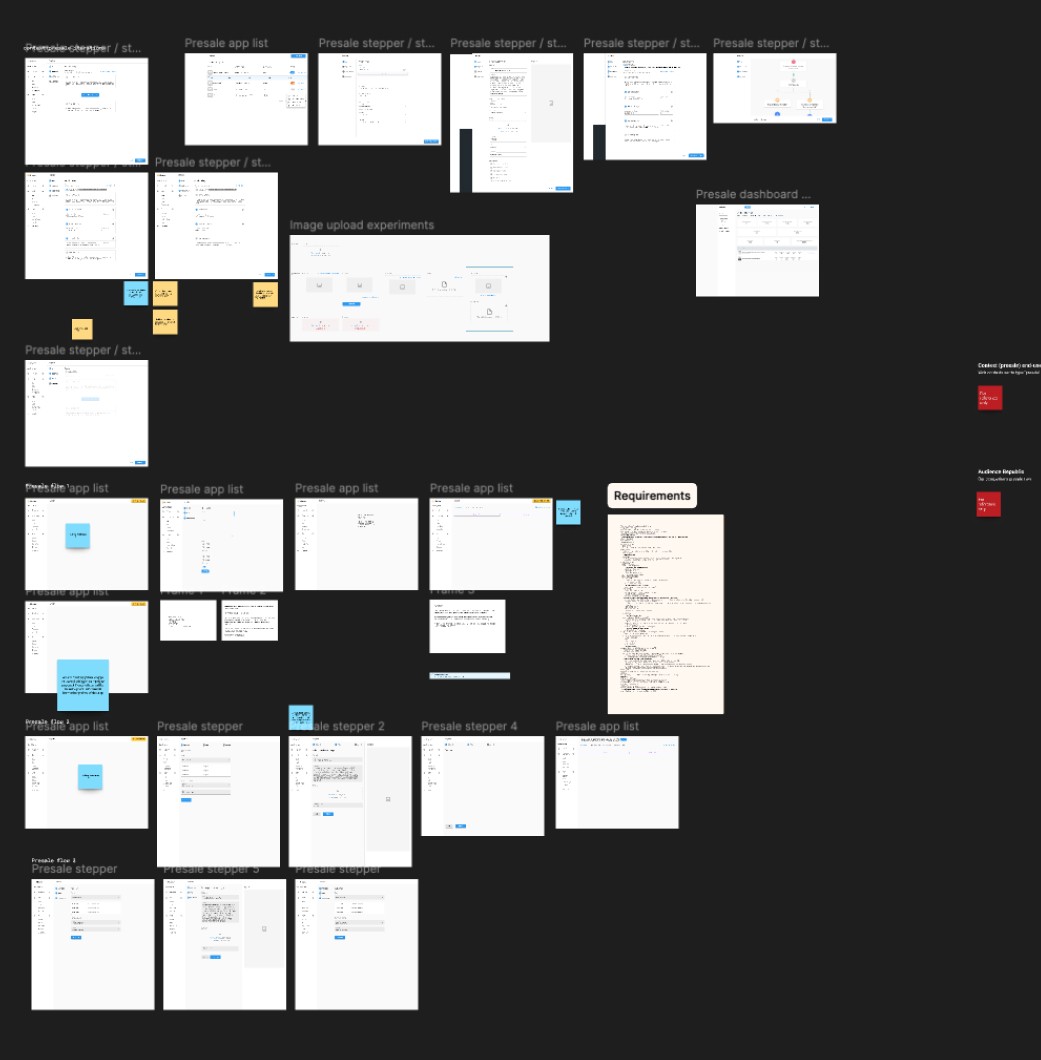
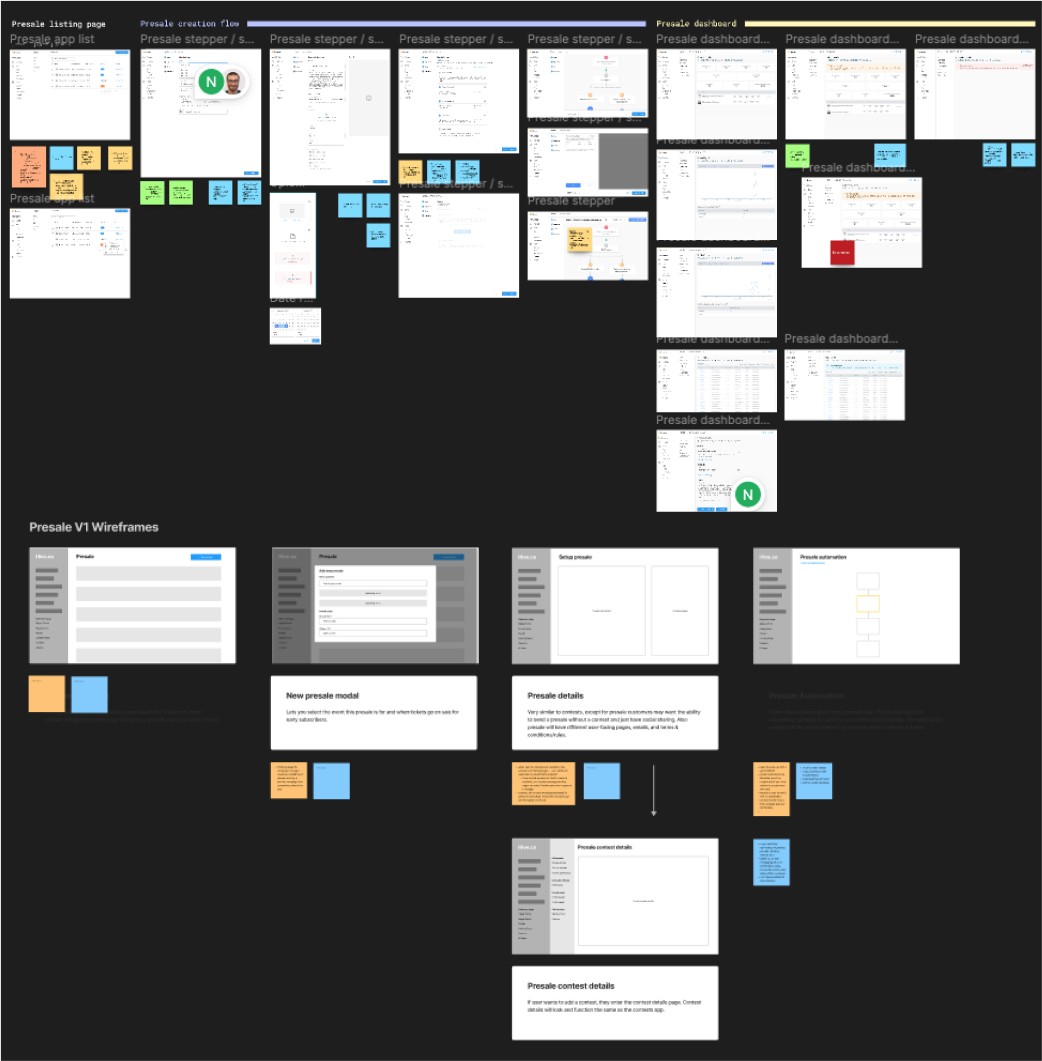
I led the design of Event Hub, Campaign Templates, Presale Campaigns, and SMS Add-ons using our MUI-based design system. Each was built to reduce friction and fit how event marketers already thought about planning campaigns.
Refinement and release
We launched incrementally and monitored adoption. Dashboard widgets, navigation changes, and in-app experiments encouraged customers to use the new event-centric workflows while giving us evidence for each refinement.
The challenge was changing behaviour
Repositioning Hive meant more than shipping features. It meant shifting how customers entered and navigated the product—and how the team understood its purpose.
Presale workflows were a known need, but had to feel structured and native. SMS was effective but underused, so it needed to appear at exactly the right moments and become nearly effortless to send. More broadly, Hive's previous flexibility had created inconsistent usage; we had to guide people toward a repeatable, high-performing strategy without taking away control.
What we shipped
Presale campaigns
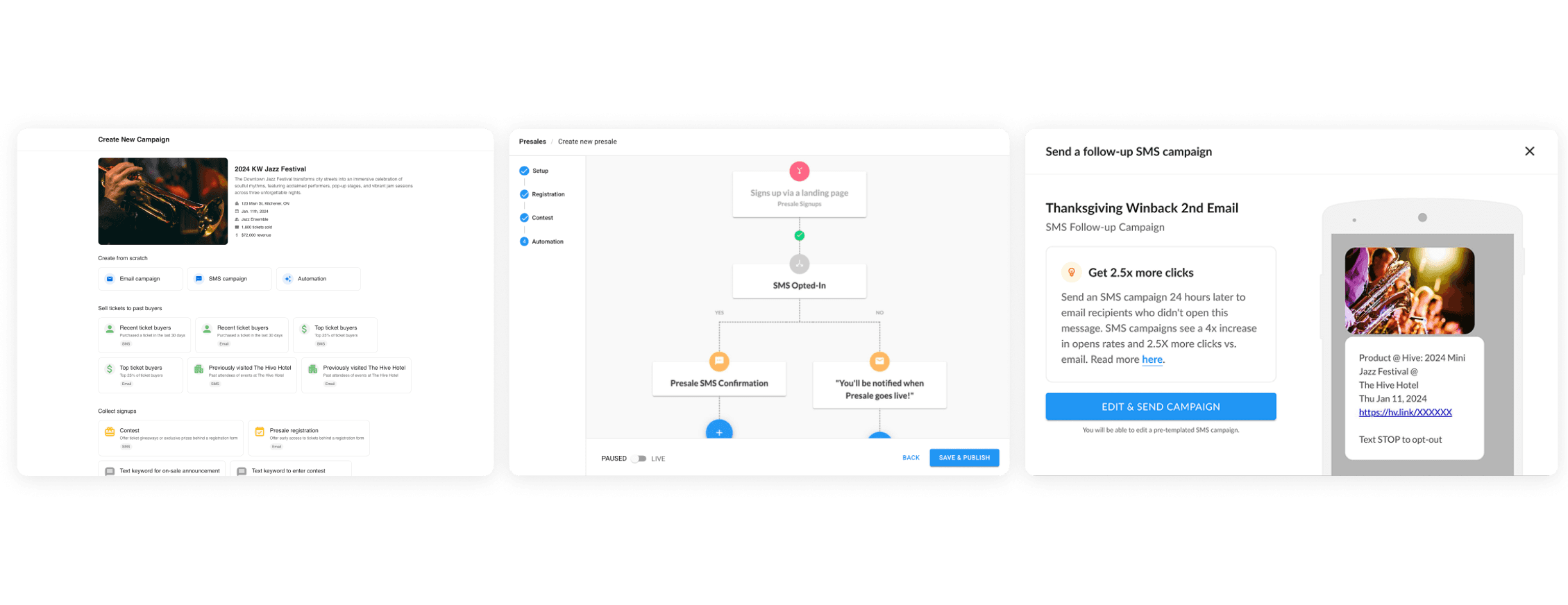
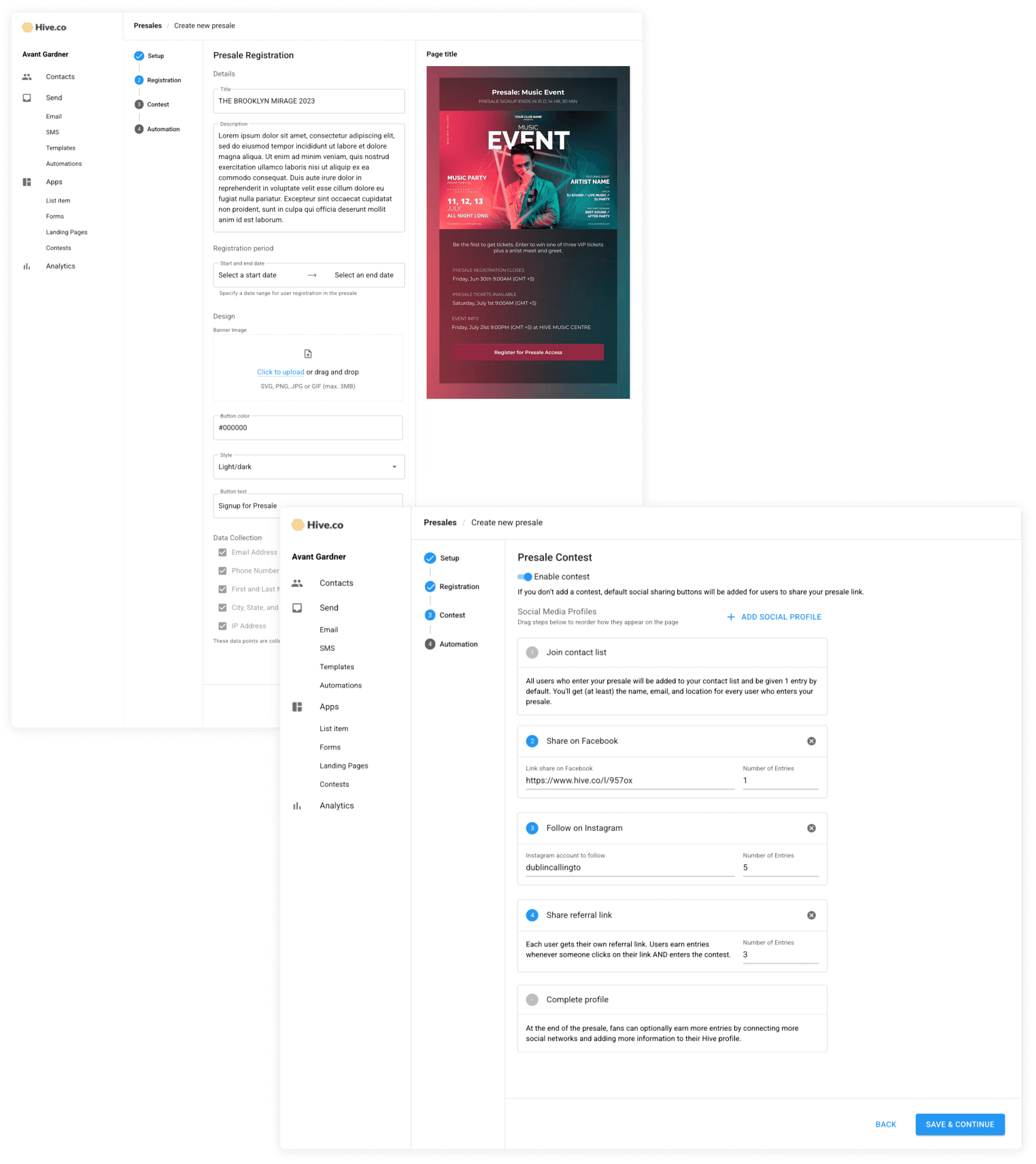
We introduced a Presale Tool to help marketers build momentum early. A user could quickly launch a signup page with automated follow-ups, capture interest, and sell tickets before the general sale.
Campaign templates
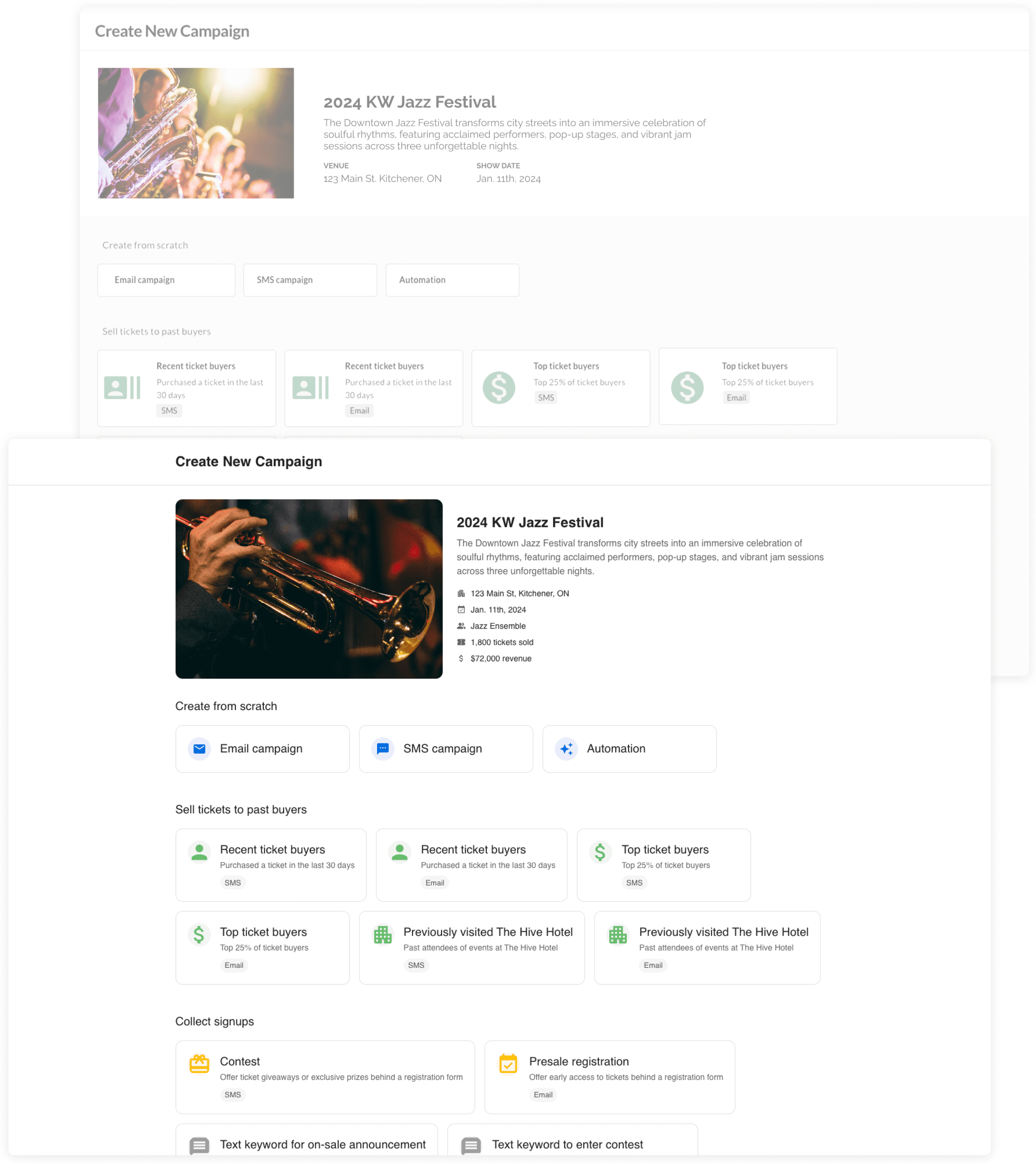
Templates based on patterns from top-performing customers gave every marketer an effective starting point instead of a blank page.
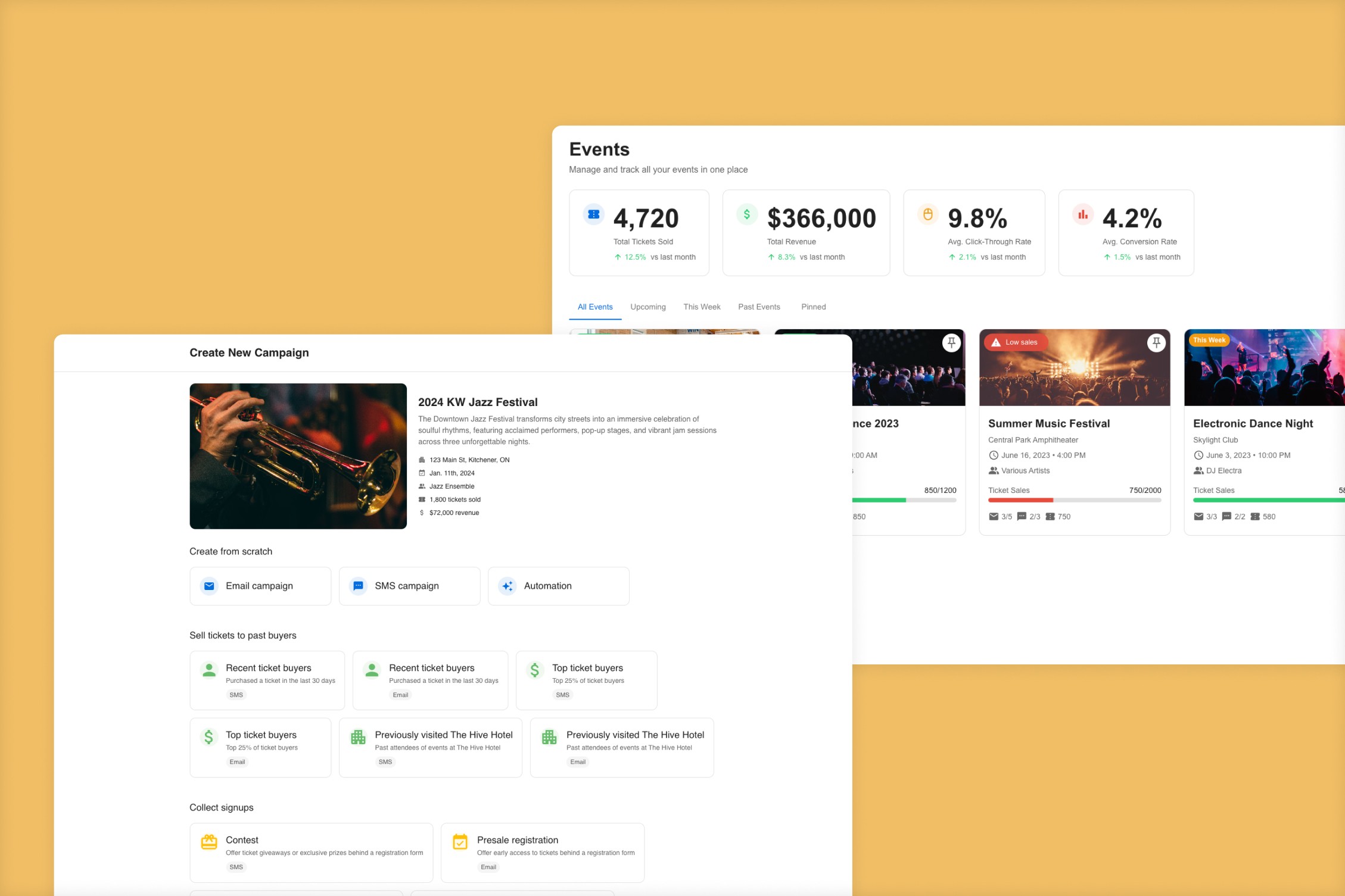
Event Hub
Event Hub became the central place to create campaigns, track performance, and manage events. It brought templates, campaign metrics, and sales data together in one view.
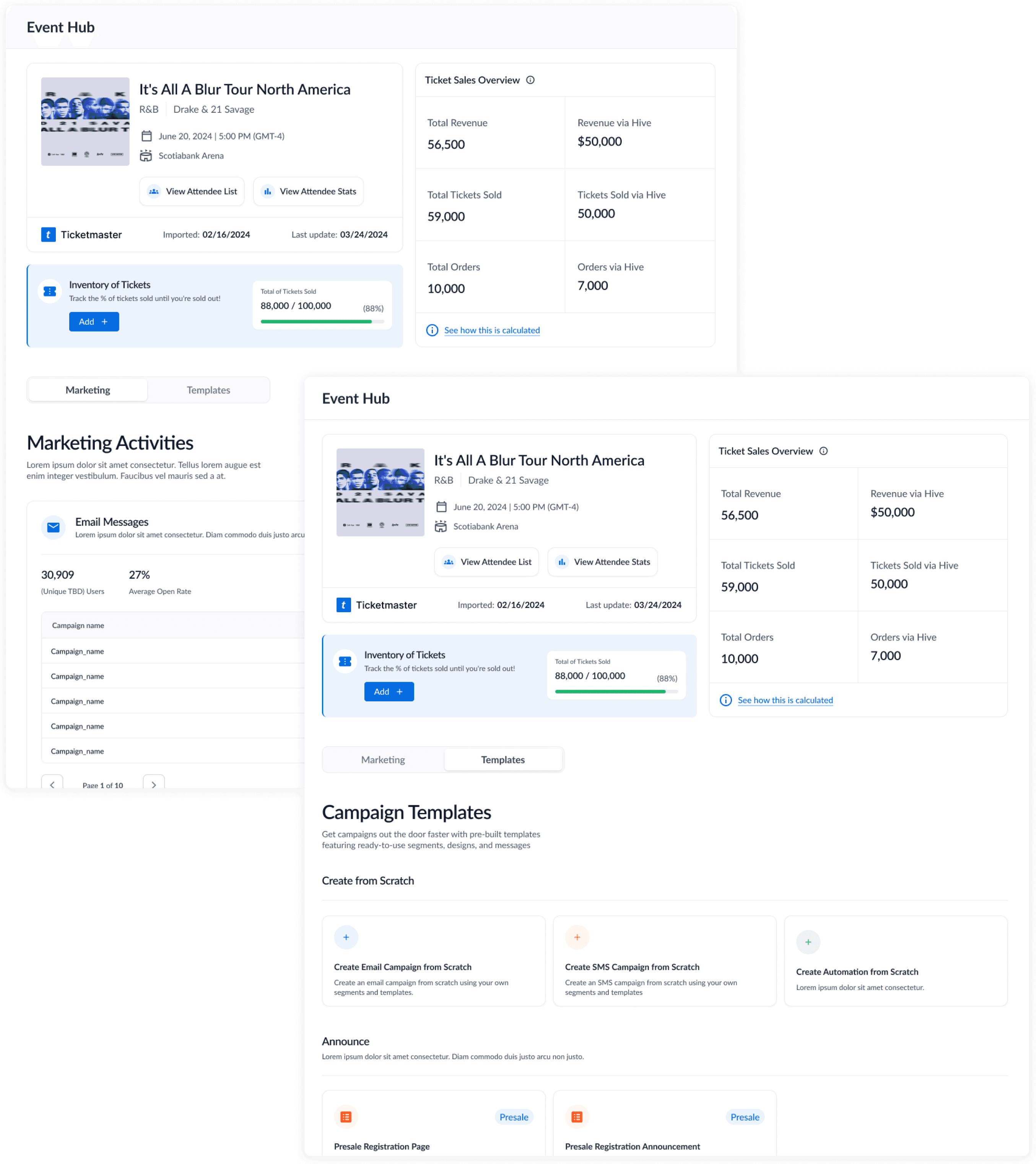
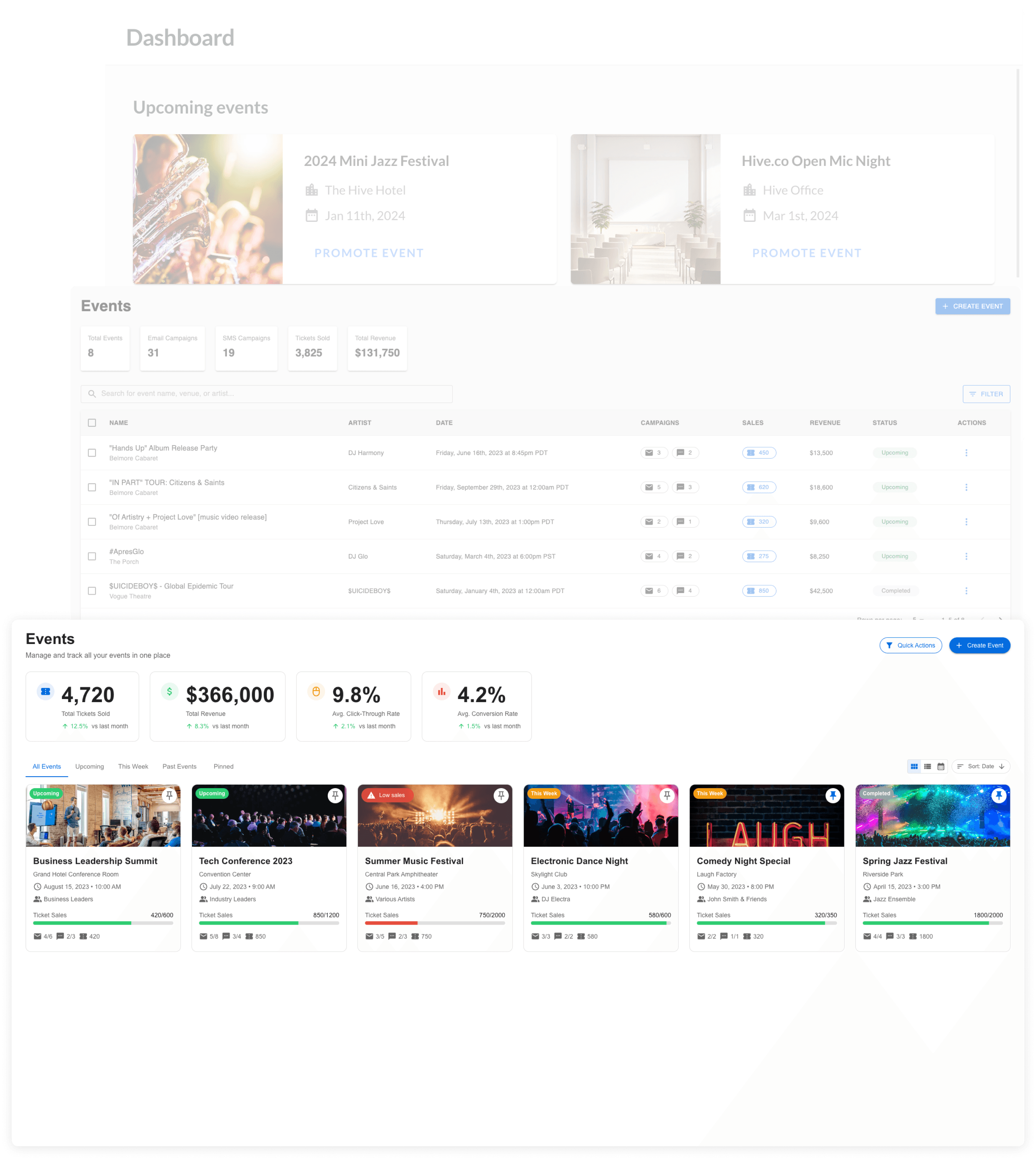
To drive adoption, we also reworked the product's entry point. The old dashboard was not creating value, so Events became the main hub, supported by summary views that kept live campaigns visible.
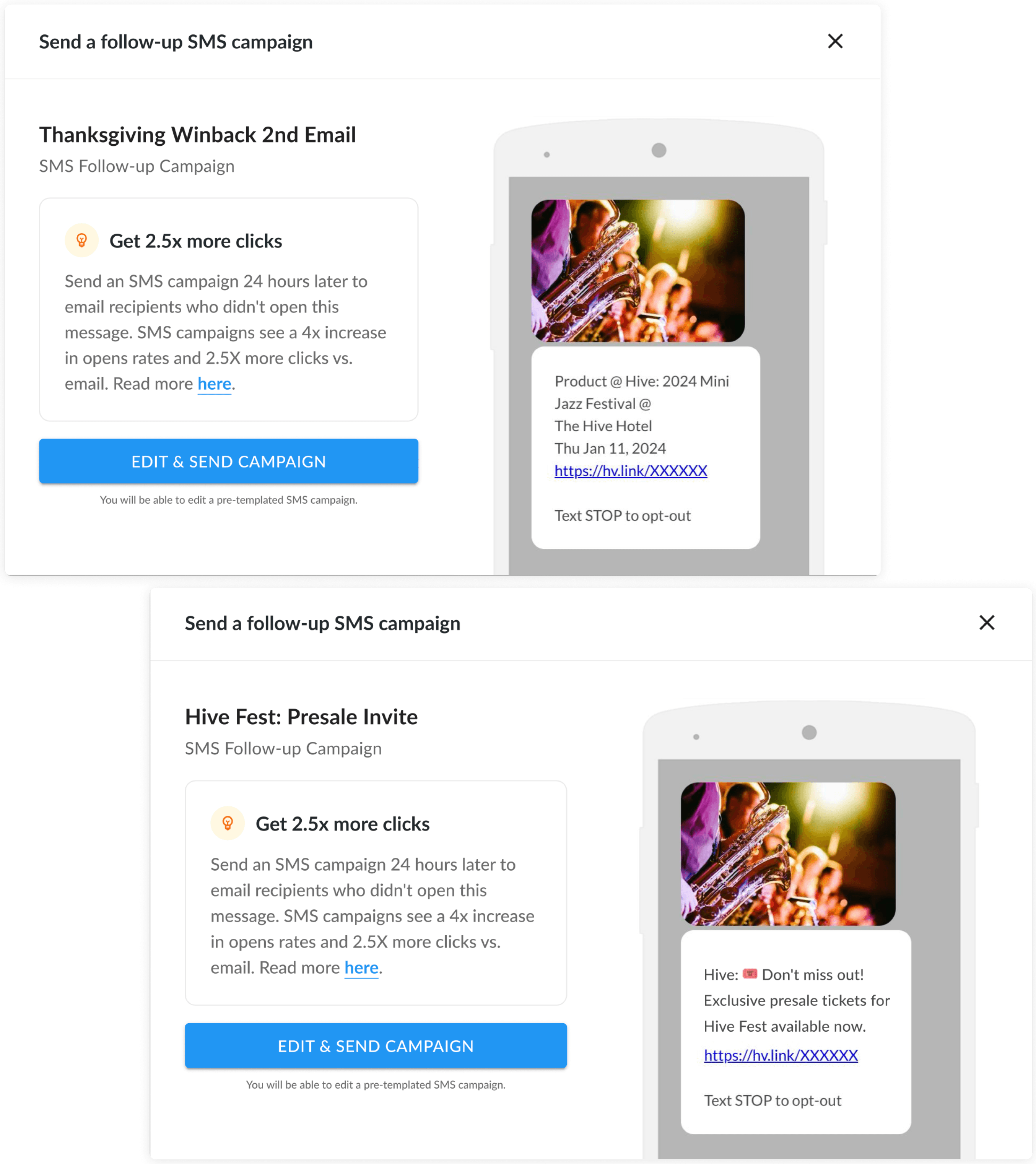
SMS without duplicate work
Customers could send a text version of any email campaign in a few clicks. Automatically carrying over the content and simplifying the send flow created a clear lift in SMS usage.
Final notes
The transformation of Hive into an event-marketing platform was both a product-strategy and UX challenge. As the first product hire, I helped define the direction, shape new workflows, and collaborate closely with engineering and marketing to make the shift real. The results—faster campaign creation, stronger campaign performance, and more SMS usage—showed the value of designing the product around a specific job rather than a collection of tools.